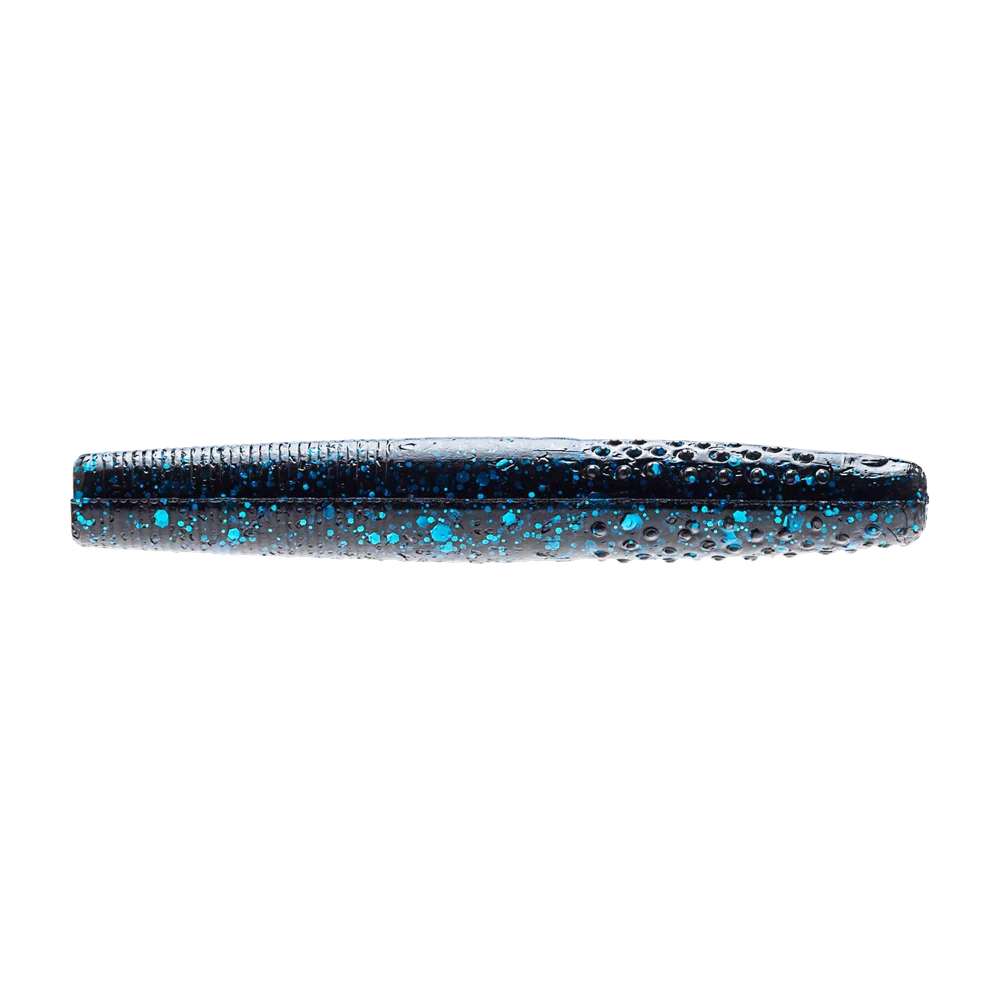
Z-Man TRD (Ned Rig): the tiny lure that saves tough days
The right lure in the wrong spot still catches nothing. CarnaFish spots the zone that works, from a single photo.
There's a question that's come up on American bass fishing forums for a decade: "what do I throw when nothing else works?" Nine times out of ten, the answer is a stubby 3-inch piece of plastic on a mushroom-shaped jighead — the Ned Rig, popularised by Midwest angler Ned Kehde. The Z-Man TRD (The Real Deal) is the benchmark version, and it's since found a real following in France for perch too.
Where the technique comes from
The Ned Rig isn't a marketing gimmick — it grew out of a very concrete problem: getting heavily pressured bass to bite on hard-fished Kansas lakes, in any season, under any weather. Ned Kehde popularised a minimalist approach — a stubby stick bait, barely moving, sitting on a light jighead — that triggers strikes where bigger lures get ignored. Z-Man's TRD applies that principle with ElaZtech, a material that floats naturally and keeps the lure quivering even with zero input from the angler.
Rigging it step by step
- Pick the right mushroom head: 1.5-2 g for shallow water or perch, 3-4 g for open water or wind.
- Nose-hook the TRD, bring the hook out just underneath, then re-insert the point so it sits flush against the back — the hookpoint stays exposed, this isn't a weedless rig.
- Check the body sits perfectly straight on the head — a crooked TRD loses its whole point, spinning instead of staying stable.
The Ned Rig punishes a rushed rig job: a sloppy setup spins on the fall, and it's precisely the body's dead-still posture that gets the bite.
The retrieve: doing (almost) nothing
This is what trips up most anglers used to standard soft plastics. The TRD's retrieve comes down to three moves:
- Drag along bottom: drop it, let it sit a few seconds, then pull it 20-30 cm while staying in contact with bottom.
- Long pause: 3 to 5 seconds minimum between drags. It's during the pause that the TRD's buoyant body slowly rights itself — a motion perch and bass key in on very well.
- No sharp rips: forget twitch-and-jerk reflexes here. The slower and more subtle, the better — especially on fish already pressured by other anglers.
When to reach for the Ned Rig
- Tough or pressured fish: heavily fished lakes, well-known spots, autumn outings where bigger lures trigger nothing.
- Cold water: pre-spawn spring or late autumn, when fish metabolism demands a slow presentation.
- Fine-tuning a spot: its small size and subtlety make it a good way to confirm fish are present before switching to bigger gear.
It's not the right call for covering a large lake quickly or targeting an actively feeding surface bass — for that, a Zoom Super Fluke or a topwater popper will do a far better job.
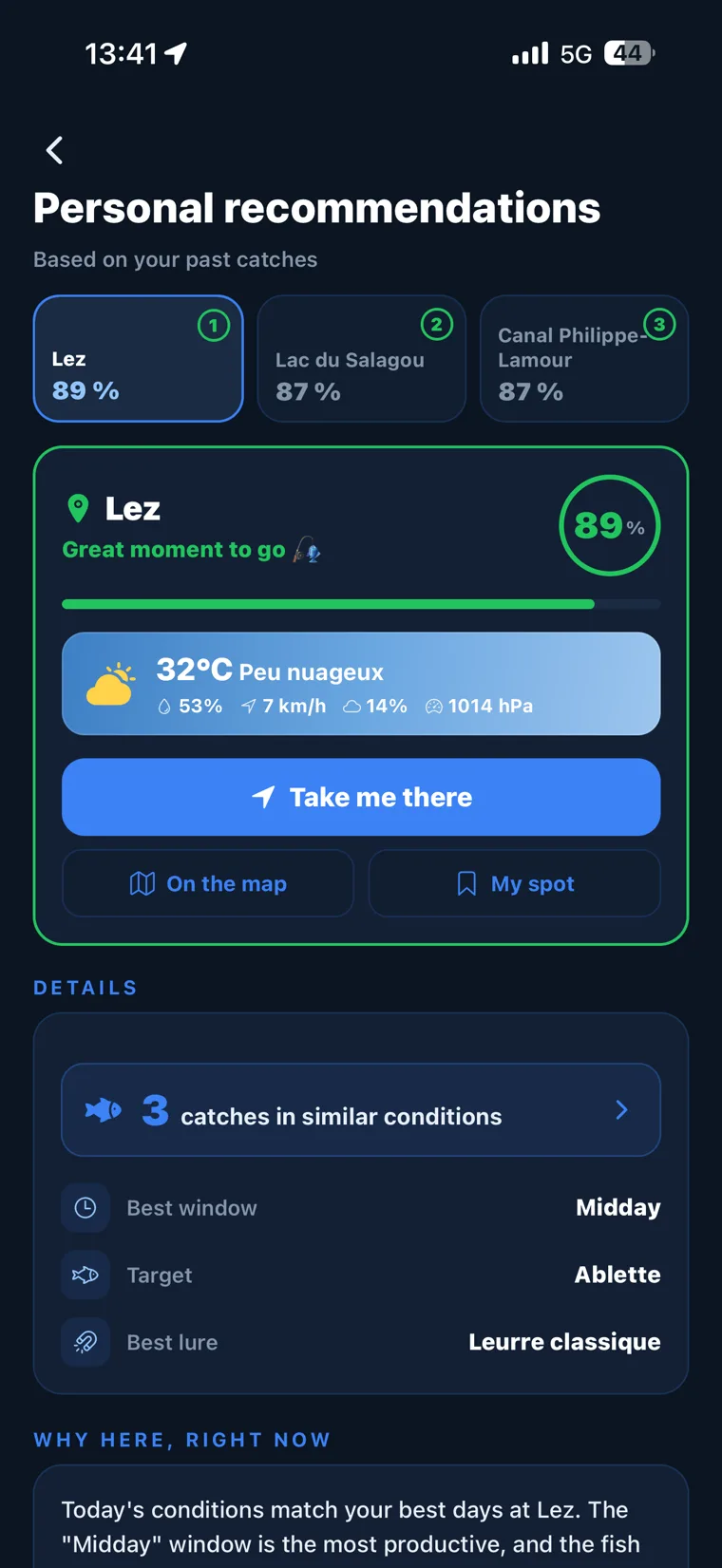
Not sure what to tie on?
Photograph your spot: CarnaFish reads the scene, cross-checks the conditions and gives you the zone, the lure and the retrieve. Free on iOS and Android.
Colour: less is more
The TRD doesn't need flash to work, unlike a blade bait. In clear water, natural tones (green pumpkin, watermelon, motoroil) dominate by far. In colder or murkier water, move to darker or slightly higher-contrast colours — but stay subtle. The Ned Rig's effectiveness comes from imitating a tired, small prey item, not from attraction.
Perch or bass: two slightly different uses
For perch, the TRD shines on an ultra-slow retrieve near bottom, often over a margin or a shallow drop-off. For bass, it earns its keep on educated fish, as a backup to a Yamamoto Senko 5 when fish refuse a standard stick bait. Either way, patience beats coverage speed.
The Ned Rig makes a broader point: the right lure never replaces reading the spot and the fish's mood closely. That's exactly what CarnaFish does: one photo of the spot is enough for the AI to read the scene and point you to the right zone and approach, even when the answer is a lure as subtle as the TRD. To go deeper on perch generally, our guide to perch fishing with lures pairs well with this one.
The four-point rundown
- The TRD rigs on a 1.5-4 g Ned mushroom jighead, hookpoint exposed.
- The retrieve is minimal: drag along bottom, 3-5 second pauses, never a sharp rip.
- Reserved for tough fish, cold water, or fine-scouting a spot.
- Natural colours by default, darker ones in cold or murky water.
FAQ
What exactly is a Ned Rig?
It's a finesse technique born in the US that pairs a stubby soft plastic with a very light mushroom-shaped jighead. The Z-Man TRD is the reference bait, thanks to ElaZtech giving it a unique buoyancy and quiver at rest.
What jighead should I use with the TRD?
A 1.5-2 g mushroom head for shallow water or perch, 3-4 g for open water or strong wind. The mushroom shape keeps the lure stable and upright on bottom.
How do you retrieve a Ned Rig without blowing it?
Drag the lure gently along bottom for 20-30 cm, then pause 3 to 5 seconds before repeating. The most common mistake is moving it too fast or too hard, which cancels out the whole point of the technique.
Does the Ned Rig work for perch in Europe?
Yes, very well, especially on educated perch in heavily fished lakes and canals. It's a useful addition to a box already stocked with more standard lures like a shad or a spinner.
Why does my TRD spin on the retrieve?
It's almost always a rigging issue: the body isn't centred and straight on the jighead. Re-rig it, making sure the lure sits perfectly in line with the hook shank.
Does the Ned Rig replace other finesse lures?
No, it complements them. On a bass that refuses a standard stick bait like the Yamamoto Senko, a Ned-rigged TRD offers an even subtler presentation and often saves the trip.
The full perch lure guideSeason-by-season strategy: which family of lure, when, and why.Go from theory to fish
CarnaFish reads your spot from a photo and gives you the game plan: zone, lure, retrieve. Free on iOS and Android.