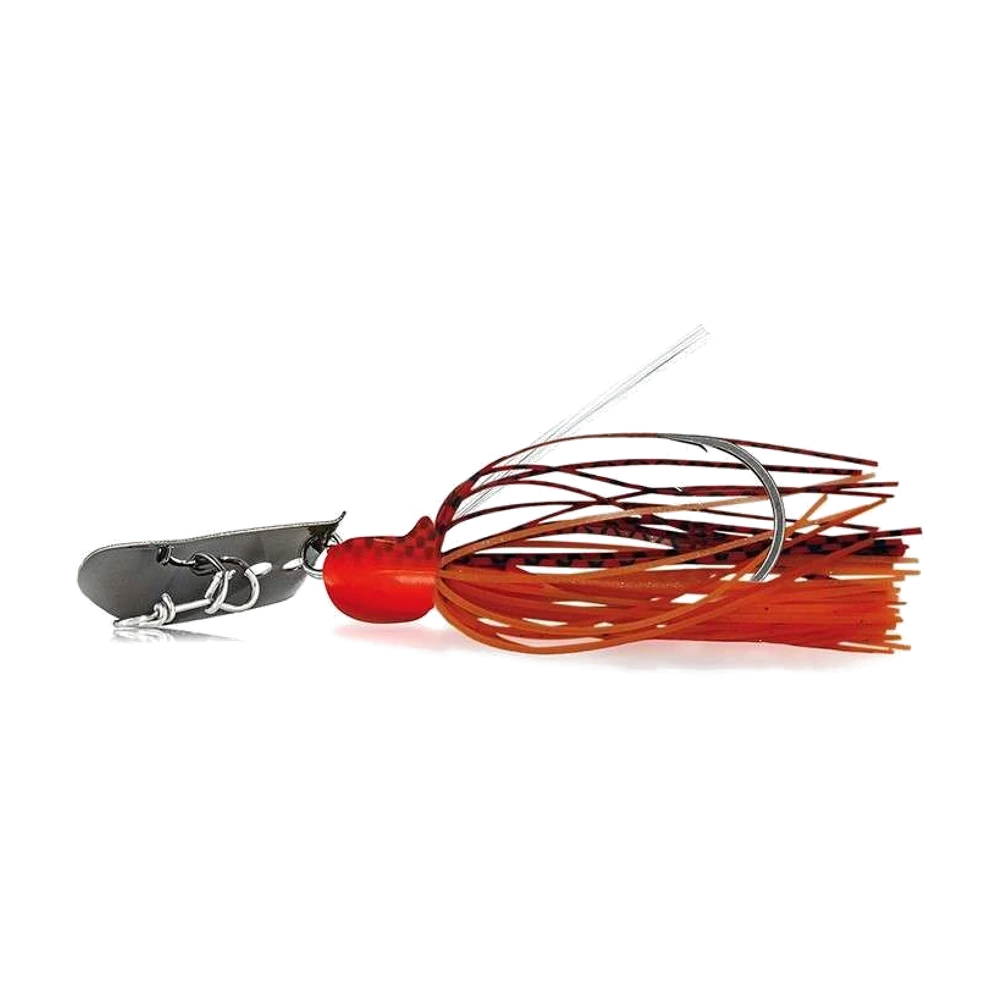
Molix Compact Blade Jig: the chatterbait with the right thump
The right lure in the wrong spot still catches nothing. CarnaFish spots the zone that works, from a single photo.
Between the spinnerbait and the jig sits a lure family that didn't exist twenty-five years ago: the chatterbait, or bladed jig. The Molix Compact Blade Jig is a tidy, compact take on it, built to slip through cover where a standard spinnerbait gets stuck. Here's why it deserves a spot alongside your other search baits, not instead of them.
What actually separates a chatterbait from a spinnerbait
On a spinnerbait, the blade spins freely on an arm while the body stays stable. On a chatterbait, the blade is bolted directly to the front of the head: every kick of the blade shakes the whole lure, trailer included. The result is a wider, lower-frequency vibration that fish read differently, plus a lower, tighter swim path closer to the bottom or cover. That difference in frequency is often exactly what makes a fish bite a lure it's ignored a spinnerbait a hundred times in the same spot.
The Molix's compact head also snags less on low branches than bulkier heads, while keeping enough mass to drive the shovel blade properly even at slow speed.
Matching weight to target depth
- 1/4 oz: margins, under 1 m (3 ft), low cover or very shallow water.
- 3/8 oz: the default setting, effective from 1 to 2 m (3-7 ft), and the one to tie on first on an unfamiliar spot.
- 1/2 oz: past 2 m (7 ft), or for casting into a headwind while keeping bottom contact in open water.
The trailer does half the work
A chatterbait without a trailer swims poorly — it's the soft plastic at the back that dampens the blade's kick and gives the lure its silhouette. Two options dominate:
- Craw trailer: shorter profile, faster fall, ideal for probing bottom and rocky areas.
- Shad trailer (paddle tail): longer profile, smoother swim on a straight retrieve, better suited to open water or imitating baitfish.
The wire keeper built into the back of the head stops the trailer from sliding during the retrieve — a small detail that matters a lot over a full session.
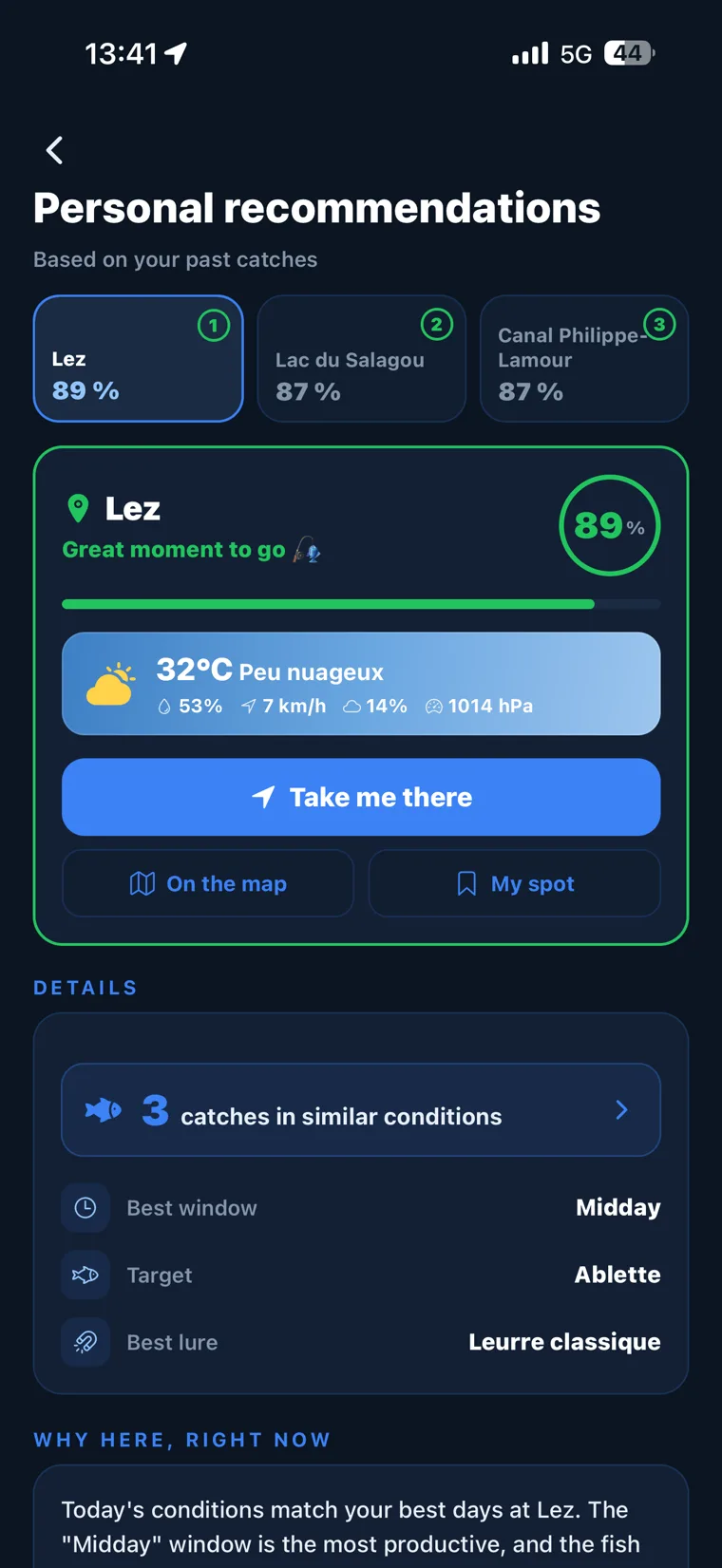
Not sure what to tie on?
Photograph your spot: CarnaFish reads the scene, cross-checks the conditions and gives you the zone, the lure and the retrieve. Free on iOS and Android.
Three speeds, three jobs
- Slow, steady retrieve: the baseline, effective year-round, especially in cold water.
- Slow-rolling near bottom: the blade keeps thumping even at a crawl, deadly on a sitting bass or a sluggish pike coming out of winter.
- Yo-yo: a few cranks followed by a controlled fall along a drop-off — the strike almost always comes on the fall.
Simple rule: if you can't feel the thump in the rod anymore, the chatterbait has stopped working — check the weedguard for grass or debris.
Clear water versus stained water
In clear water, green pumpkin stays subtle and reads well as a crawfish or small baitfish. In stained water, switch to chartreuse/white: silhouette matters less than vibration at that point, and a bright colour just helps you spot the strike. In low light or very murky water, black/blue gives the sharpest silhouette contrast.
Why pike bite a chatterbait too
Chatterbaits get filed under "bass lure," but their low-frequency thump carries very well through the stained water typical of pike territory. Rigged with a good-sized shad trailer on a 3/8-1/2 oz head, it's a credible alternative to a standard spinnerbait, with a lower swim path that slips under low bankside branches more easily.
That said, vibration never replaces reading the spot first — that's the whole point of the complete pike lure guide, and it's exactly why CarnaFish exists: you photograph your spot, the AI reads the scene, and hands you a zone and a lure type suited to the day's conditions.
FAQ
What's the difference between a chatterbait and a spinnerbait?
A chatterbait's blade bolts directly to the front of the head, shaking the whole lure including the soft trailer. A spinnerbait's blade spins freely on an arm while the body stays stable, producing a narrower, higher-pitched vibration.
What trailer should you use with the Molix Compact Blade Jig?
A soft craw for probing bottom and rocky cover, a paddle-tail shad for a smoother swim in open water. The trailer directly shapes how strong the vibration feels — bulkier trailers push more water.
What retrieve speed works best for a chatterbait?
A slow, steady retrieve works year-round. In cold water or on inactive fish, slow it down further and hug the bottom — the blade keeps thumping even at a crawl.
Does a chatterbait work for pike?
Yes, especially in stained water: its low-frequency thump carries far and its low swim path slips under bankside cover well. Rig a good-sized shad trailer on a 3/8-1/2 oz head.
Why has my chatterbait stopped vibrating mid-retrieve?
Usually weed or debris caught on the weedguard or trailer, blocking the blade. Reel in, clear it, and recast — you should feel a continuous thump through the rod.
What colour works best in very murky water?
Black or black/blue gives the sharpest silhouette contrast against ambient light, which matters more than exact colour when visibility is very limited.
The full bass lure guideSeason-by-season strategy: which family of lure, when, and why.Go from theory to fish
CarnaFish reads your spot from a photo and gives you the game plan: zone, lure, retrieve. Free on iOS and Android.