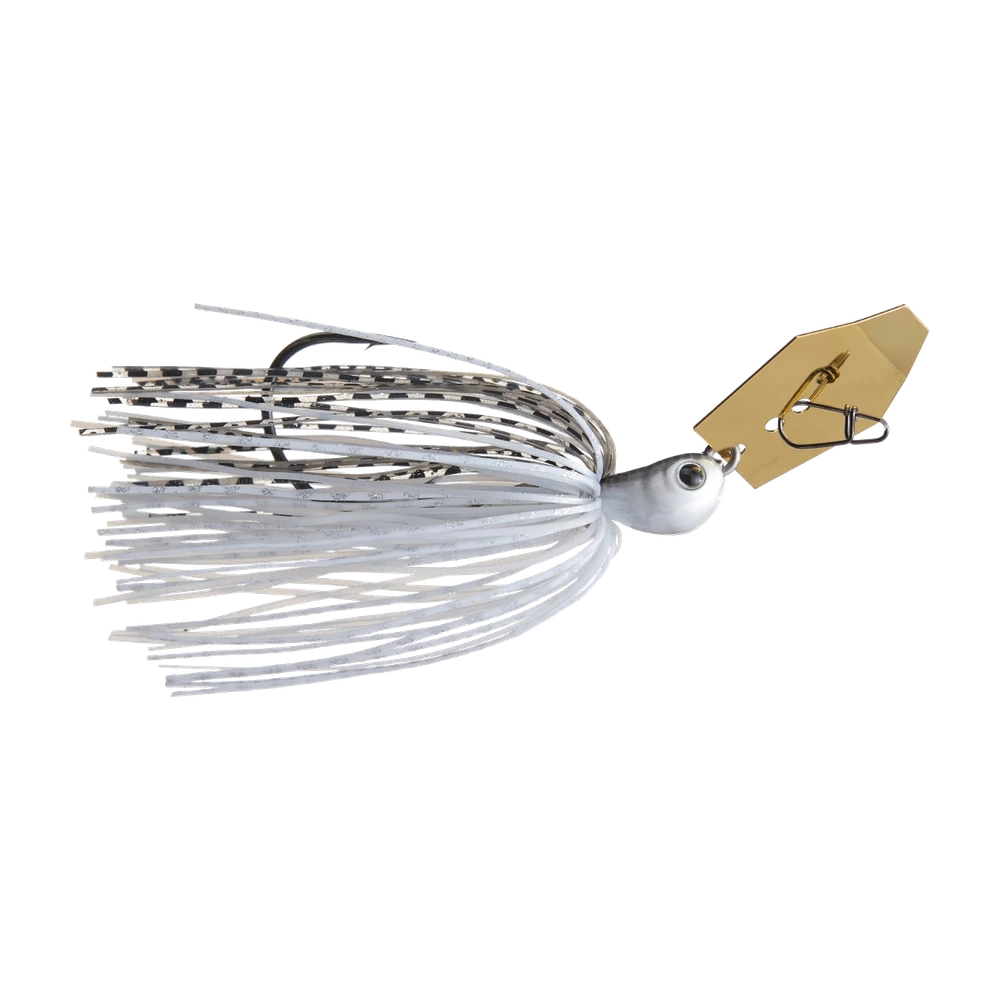
Z-Man ChatterBait Jack Hammer: the chatterbait that settled the debate
The right lure in the wrong spot still catches nothing. CarnaFish spots the zone that works, from a single photo.
The chatterbait has been around since the mid-2000s, invented by an amateur angler in South Carolina who welded a metal blade to the front of a swim jig just to see what would happen. The idea took years to win over spinnerbait purists, until Z-Man partnered with Bassmaster Elite Series pro Chris Lane to build the Jack Hammer: a ground-up redesign, more stable and more consistent, that quickly replaced older chatterbaits in most tournament anglers' boxes. Today, "Jack Hammer" has almost become shorthand for the whole category.
What sets the Jack Hammer apart from a classic chatterbait
Early chatterbaits had a well-known flaw: past a certain speed, the blade would go off-balance and the lure would start spinning on itself instead of vibrating cleanly. Z-Man solved that with a low-centre-of-gravity head and a thinner stainless steel hex blade that starts vibrating from the first turns of the reel handle and stays on track even at higher speed. In practice, the Jack Hammer tolerates a much wider retrieve-speed range than a generic chatterbait, cutting down how many lures you have to try before finding the right cadence.
The four weights and their uses
- 3/8 oz (10.5 g): the most versatile format, effective from 0.3 to 1 m (1-3 ft), suited to most shallow spots.
- 1/2 oz (14 g): for going slightly deeper or casting into wind, without losing handling.
- 3/4 oz (21 g): reserved for bulkier trailers or depths near 1.5 m (5 ft).
- 1 1/4 oz (35 g): a specialised format for fast deep-water searching, best paired with heavy tackle.
The trailer: half the lure's work
A bare Jack Hammer with no trailer only delivers part of its potential. The soft-plastic trailer, rigged on the reinforced Gamakatsu hook, adds bulk, a secondary kick that complements the blade's vibration, and often a contrast colour that makes the lure more visible.
- A soft craw (crayfish-claw style) adds a slow undulation and a wider profile, excellent in cold water or on inactive fish.
- A paddle tail adds an extra tail kick that amplifies the overall vibration, suited to a faster retrieve on active fish.
- A trailer too bulky for the chosen Jack Hammer weight throws off the balance and pulls the lure up to the surface prematurely — always check the weight/trailer match before casting.
Field rule: if the Jack Hammer "rises" too fast toward the surface during the retrieve, it's almost never a cadence problem — it's a trailer too big for the head weight.
Retrieve: simple but not simplistic
The Jack Hammer's strength is that a strictly steady retrieve is enough to generate an effective vibration, with no need for the jerks a jerkbait requires. Two variations are still worth testing:
- Steady straight retrieve: the baseline, effective most of the time.
- Occasional contact with weed or bottom, letting the lure bump then resume its vibration: that change in rhythm often triggers the strike, particularly on bass holding along weed edges.
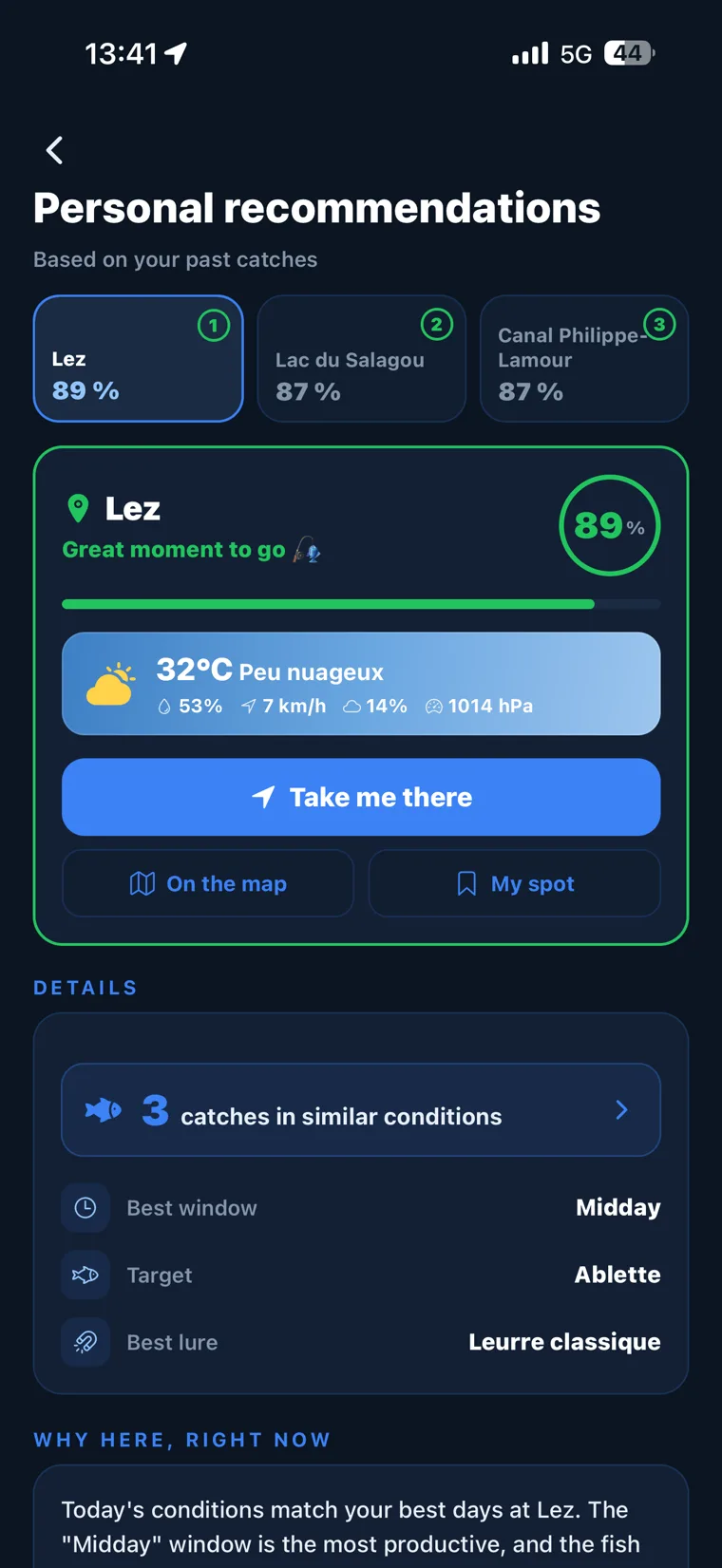
Not sure what to tie on?
Photograph your spot: CarnaFish reads the scene, cross-checks the conditions and gives you the zone, the lure and the retrieve. Free on iOS and Android.
Colour by water clarity
- Clear water: watermelon, a natural tone that mimics dominant clear-water prey well.
- Stained water: chartreuse/black, a high-contrast combo that stays identifiable even as visibility drops.
- Low light: black/blue, a silhouette that stands out well even in dark water.
Jack Hammer versus spinnerbait: two different vibrations
Compared with a Double Colorado, the Jack Hammer produces a tighter vibration and a more compact profile, with a more erratic directional change generated by the hex blade. The spinnerbait, with its spinning blades, pushes more water and carries further in very murky water. On fish that have already seen plenty of standard spinnerbaits go by on a heavily fished spot, the chatterbait's different signal often makes the difference.
For bass specifically, our beginner's guide to bass fishing covers when this kind of vibrating lure outperforms a classic soft plastic. And if you're torn between chatterbait and spinnerbait on unfamiliar water, CarnaFish reads a photo of the location to point you toward the lure family best suited to the vegetation and water clarity it sees.
The bottom line
- The low-centre-of-gravity head and hex blade fix the main flaw of older chatterbaits: high-speed spin-out.
- Pick the weight (10.5 to 35 g) based on depth and the trailer's expected bulk.
- The trailer does half the work: craw in cold water, paddle tail on active fish, never too bulky for the head weight.
- A steady retrieve is enough; occasional contact with weed or bottom adds a strike trigger.
FAQ
Does the Jack Hammer work without a trailer?
Technically yes, but it only delivers part of its potential. The trailer adds bulk, a complementary kick, and often a contrast colour that noticeably improves strike rate.
What trailer should you pair with the Jack Hammer?
A soft craw in cold water or on inactive fish, for a slow undulation. A paddle tail on active fish or a faster retrieve, to amplify the overall vibration.
Why does my Jack Hammer rise too fast to the surface?
Almost always because the trailer is too bulky for the chosen head weight. Check the two match before casting, or step up to a heavier head.
What Jack Hammer weight should you start with?
The 3/8 oz (10.5 g) is the most versatile, effective from 0.3 to 1 m (1-3 ft) on most shallow spots holding bass and pike.
Is the Jack Hammer better than a classic spinnerbait?
Neither better nor worse, just different: its tighter vibration and compact profile offer a different signal, especially useful on fish already conditioned to classic spinnerbaits.
How do you work a chatterbait in cluttered water?
With a steady retrieve, letting the lure occasionally bump weed or bottom before resuming its vibration. That change in rhythm often triggers a strike more effectively than a perfectly smooth retrieve.
The full bass lure guideSeason-by-season strategy: which family of lure, when, and why.Go from theory to fish
CarnaFish reads your spot from a photo and gives you the game plan: zone, lure, retrieve. Free on iOS and Android.