War Eagle Double Colorado Spinnerbait: the fix for muddy, cluttered water
One lure, endless conditions. CarnaFish reads your spot from a photo so you are not just guessing.
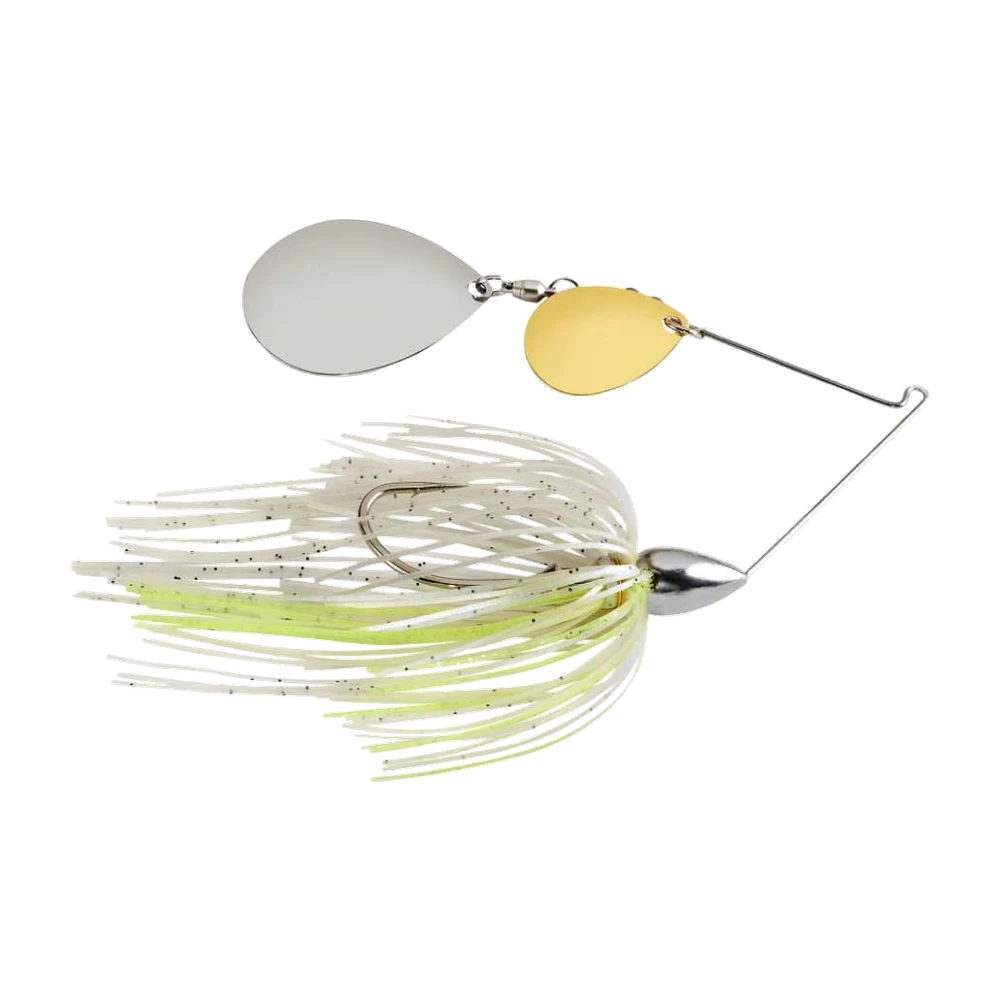
Some days a jerkbait or a shad are simply useless: the water's loaded with silt after a flood, weed covers the whole spot, and a fish hunting by sight has no chance of spotting a subtle lure anyway. That's exactly the spinnerbait's home turf, and War Eagle's Double Colorado is one of the most effective in that specific role: two cupped blades that push a huge amount of water, and a semi-rigid arm that shields the hook in the thickest cover.
Why two Colorado blades instead of one
A Colorado blade — round and cupped — produces more vibration and less flash than an elongated, subtler willow blade. Doubling it up changes the equation: the Double Colorado generates a particularly strong low-frequency vibration, detectable through a fish's lateral line even in water where visibility drops to a few centimetres. That's a clear edge over a single-blade model in the murkiest water, at the cost of more lift, which makes the lure less suited to a very fast retrieve.
Three weights for three depths
- 1/4 oz (7 g): margins and shallow water, up to 0.5 m (1.5 ft). Great for working along weed edges near the surface.
- 3/8 oz (10.5 g): the most versatile weight, effective from 0.5 to 1.5 m (1.5-5 ft) depending on retrieve speed.
- 1/2 oz (14 g): for going down to 2 m (6 ft) or casting into wind, especially early and late season when fish hold deeper.
The retrieve that changes everything: the slow roll
The most common mistake with a spinnerbait is retrieving it too fast, on the assumption that speed compensates for poor visibility in muddy water. The opposite works better with the Double Colorado.
- The slow roll: a slow, steady retrieve that lets the lure sink slightly while keeping the blades turning. This is the number one technique in cold or muddy water.
- Bottom contact: let the lure occasionally tick bottom or brush against submerged cover. Contact often triggers a reaction strike, especially from pike.
- The classic steady retrieve: reserved for active fish in clearer water, where blade flash alone is enough to draw a strike without needing to slow down as much.
Field rule: in muddy water, slow down before you speed up. A spinnerbait retrieved too fast in loaded water simply doesn't give the fish time to locate it.
Rigging built for cover
The Double Colorado's semi-rigid wire arm positions the Mustad UltraPoint hook in the shadow of the lure's body, naturally shielding it from snags in brush and thick weed — unlike a bare jighead-style rig such as a shad, which sits far more exposed. That's what lets you cast this spinnerbait straight into cluttered cover without losing a lure on every throw, where a classically rigged Squad Shad 65 would snag quickly.
One thing to watch, though: the stock silicone skirt, while hand-tied and good quality, wears down over time. Check its condition after a heavy session and keep a spare skirt on hand rather than fishing on with broken strands that shrink the lure's profile.
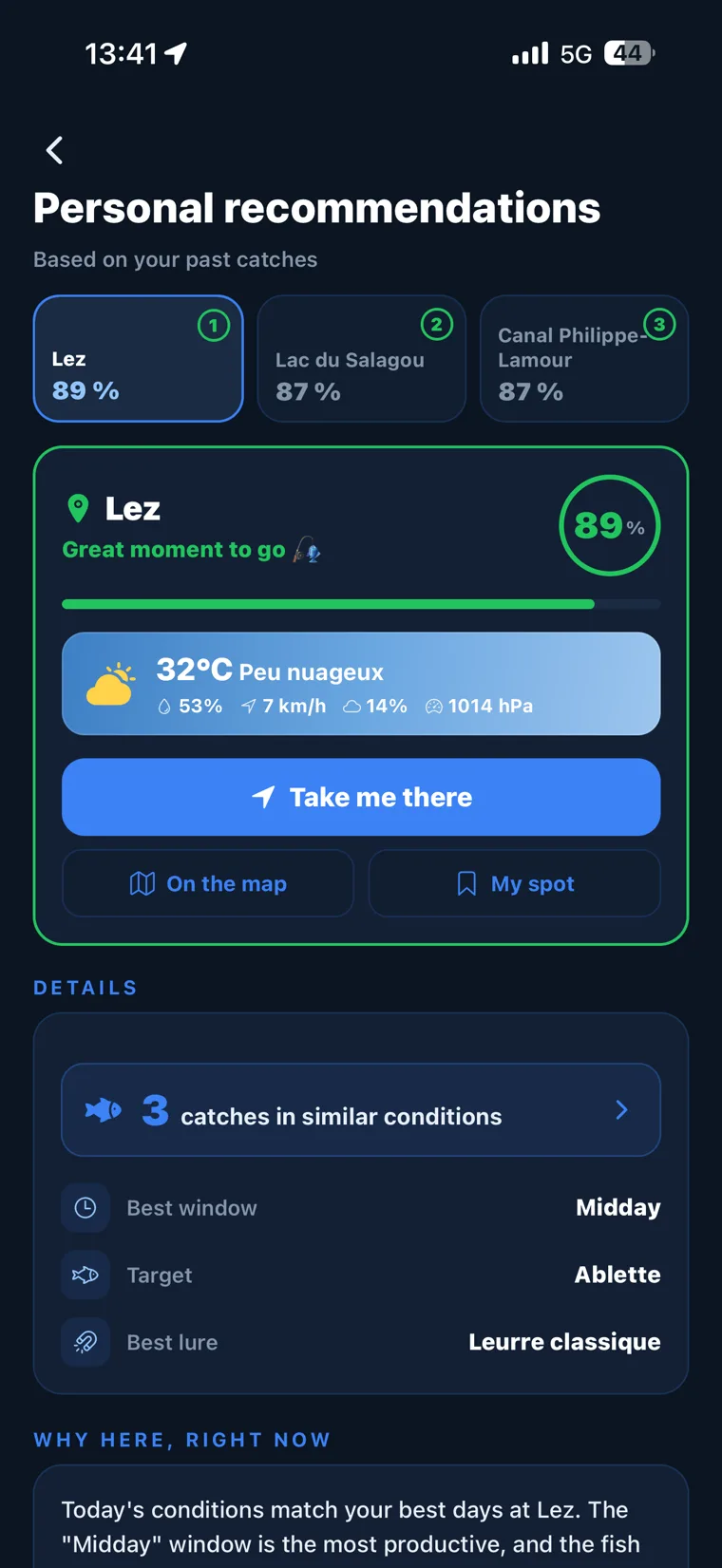
Not sure what to tie on?
Photograph your spot: CarnaFish reads the scene, cross-checks the conditions and gives you the zone, the lure and the retrieve. Free on iOS and Android.
Colour by water clarity
- Clear water: nickel or white, for a natural flash without overdoing it.
- Stained water: gold and chartreuse, a combo that carries far without distorting the silhouette.
- Low light or very murky water: black or purple, tones that read well in backlight even when colour itself is no longer visible.
Spinnerbait or chatterbait: which to choose
The Double Colorado excels in muddy water and wide-area searching thanks to its lift and continuous vibration. A ChatterBait Jack Hammer delivers a more erratic vibration and a tighter profile, often more effective on fish that have already seen plenty of standard spinnerbaits go by. The two families complement each other: spinnerbait to cover a big cluttered area fast, chatterbait to work a specific spot with a different signal.
Choosing between these lure families comes down mostly to the day's conditions, a topic covered in our full guide to pike lure selection. If you struggle to judge water clarity and weed density on a new spot before picking a lure, CarnaFish reads a photo of the location and suggests a lure family suited to the conditions it sees.
In brief
- Two Colorado blades for maximum vibration in muddy or loaded water.
- Three weights (7, 10.5, 14 g) covering margins down to 2 m.
- Slow roll and bottom contact beat a fast retrieve in loaded water.
- The semi-rigid arm naturally shields the hook — a solid choice for casting straight into cover.
FAQ
When should you use a spinnerbait instead of a soft plastic?
As soon as the water is muddy or loaded after a flood, or the spot is heavily covered in vegetation. A spinnerbait's vibration is detectable from a distance even at low visibility, which a subtle lure can't match.
Which Double Colorado weight should you pick first?
The 3/8 oz (10.5 g) is the most versatile: it covers 0.5 to 1.5 m depending on cadence and suits most pike and bass spots.
How do you retrieve a spinnerbait in muddy water?
With a slow roll — a slow, steady retrieve that lets the lure sink slightly while keeping the blades active. Deliberate contact with bottom or cover often triggers the strike.
Does the Double Colorado snag in weed?
Much less than an exposed-hook lure, thanks to its semi-rigid wire arm positioning the hook in the body's shadow. It's not fully weedless, but it handles moderate vegetation far better than a classic shad rig.
What's the difference between a Colorado and a willow blade?
The Colorado, round and cupped, produces more vibration and less flash. The willow, elongated, flashes more but vibrates less. The Double Colorado is built entirely around vibration, suited to muddy water.
Do you need a wire leader with a spinnerbait for pike?
Yes, as with any pike-targeted lure: teeth cut through fluorocarbon no matter the diameter. A 40-50 cm wire or titanium leader remains essential.
The full pike lure guideSeason-by-season strategy: which family of lure, when, and why.Go from theory to fish
CarnaFish reads your spot from a photo and gives you the game plan: zone, lure, retrieve. Free on iOS and Android.