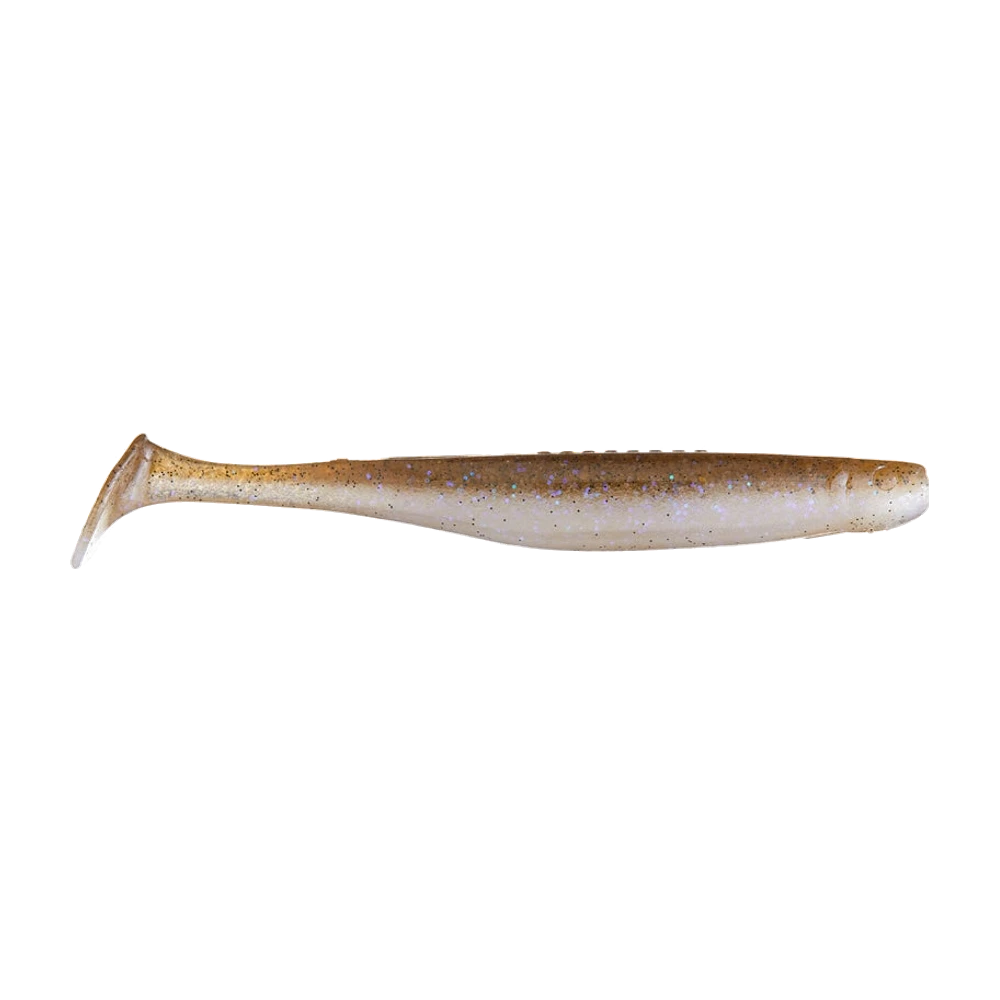
O.S.P Dolive Shad: the Japanese finesse shad that swims on the fall
Before tying this one on, it helps to know if the spot actually calls for it. CarnaFish reads the scene from a photo.
Japan's finesse fishing scene has an obsession that barely exists anywhere else: making a bait swim while it falls, with zero input from the angler. Most Western shads only work on the retrieve — dropped in the water with no rod action, they sink in a nearly straight, lifeless line. The O.S.P Dolive Shad does the exact opposite: the moment it hits the water, its tail tilts and kicks, without a single turn of the reel handle.
A fall that does the work for you
The Dolive Shad's body is slightly asymmetrical, with a centre of gravity engineered to create a deliberate imbalance during the free fall. The result: the bait wobbles down, tail kicking, mimicking a wounded baitfish sinking helplessly, unable to stabilise itself. That's a fundamental difference from a general-purpose shad like a Keitech Easy Shiner 3, whose swim depends almost entirely on an active retrieve.
A simple rule with this kind of shad: never rush to work it right after it lands. Let the bait do its own thing for two or three seconds — that's often when the bite comes, not during the retrieve.
Three rigs, each highlighting a different quality
Ned rig
A light 3-5 g round jighead brings out the Dolive Shad's natural imbalance to the fullest. Drop-lift-pause, never forcing the action. Especially effective in summer over hard bottom, when bass are inactive and looking for prey that seems easy to catch.
Weedless Texas rig
A wide-gap hook through the back, point tucked into the body: the Dolive Shad then slips through light to moderate vegetation without snagging, while keeping its ability to work on the fall between clear pockets.
Drop shot
Nose-hooked, suspended 20-40 cm above a weight, it hangs at the exact height of a fish marked on the sonar while the line transmits every twitch of the rod tip. A deadly presentation on a well-identified vertical target.
A surprisingly forgiving retrieve speed
Unlike a lot of finesse shads that lose all credibility the moment you speed up, the Dolive Shad keeps a stable swim even on a fairly fast straight retrieve, thanks to a belly profile built to resist spiralling. That's a real asset for covering water quickly before switching back to a slow presentation over zones showing activity.
The mistake that ruins the presentation
Reaching for too heavy a jighead out of an urge to "get down fast." An oversized head kills the body's natural wobble on the fall and turns the Dolive Shad into just another generic shad. Stick to the lightest weight that still reaches your target depth.
Not sure what to tie on?
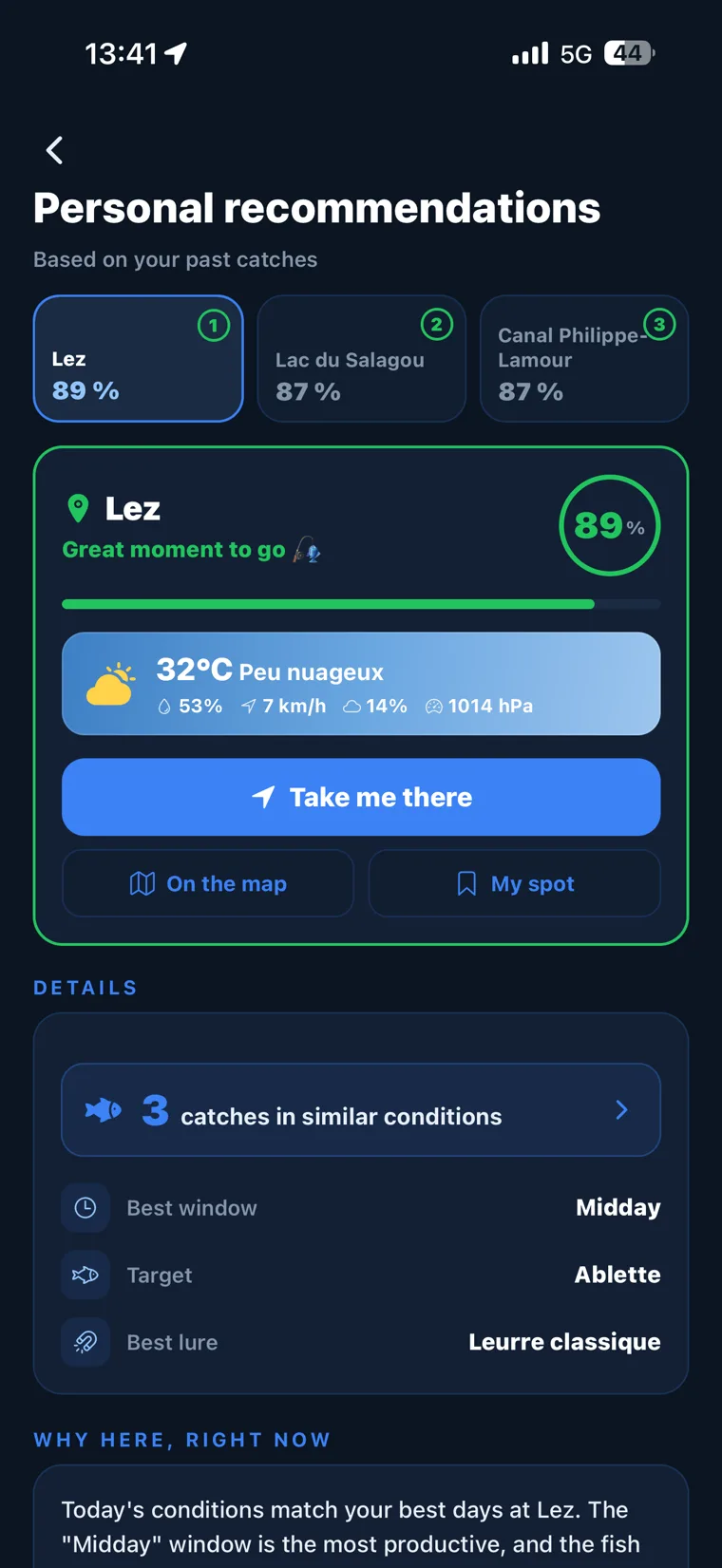
Photograph your spot: CarnaFish reads the scene, cross-checks the conditions and gives you the zone, the lure and the retrieve. Free on iOS and Android.
Colour by water clarity
- Clear water: Wakasagi, a translucent silver tone mimicking a young baitfish without excess flash.
- Stained water: Green Pumpkin Chartreuse, a solid balance of natural and visible.
- Dark water or low light: black, a clean silhouette that reads well even in low clarity.
A Japanese import that earns its spot next to local staples
The Dolive Shad isn't trying to replace a Zman TRD Ned Rig or a Keitech Easy Shiner 3 — it brings a different quality: performance on the fall, where many staples lean mostly on retrieve action. On an especially wary fish, that difference is sometimes exactly what draws the strike.
The best finesse shad in the world can't replace reading depth and bottom type correctly. That's exactly what CarnaFish makes easier: a photo of the spot, and the app suggests a zone and a presentation suited to the conditions. To build tackle and spot-reading fundamentals, our beginner's guide to bass fishing is a good starting point.
Key takeaways
- Swims on the free fall alone, with no angler input — the trait that sets this shad apart from generic models.
- Three complementary rigs: ned rig for the fall effect, weedless Texas in light weed, drop shot for precise depth.
- Stays stable even on a fast retrieve, letting you cover water before slowing down.
- A jighead that's too heavy kills the body's natural fall-wobble.
FAQ
Does the Dolive Shad really swim without any rod action?
Yes, that's its main trait: the moment it hits the water, its slightly asymmetrical shape makes it wobble and kick its tail on the free fall, with zero reel or rod input needed.
What jighead weight should I use on a ned rig?
Between 3 and 5 g depending on depth and wind. A head that's too heavy kills the bait's natural wobble on the fall, which is the whole point of this shad.
Does the Dolive Shad handle weed?
Rigged weedless Texas-style, with the hook tucked into the back, it slips through light to moderate vegetation fine. For very dense weed, a hollow-body frog remains the better tool.
Can this shad be fished on a fast retrieve?
Yes, its swim stays surprisingly stable even on a fairly fast straight retrieve, letting you cover water quickly before switching to a slower presentation over active zones.
What colour should I pick in clear water?
Wakasagi, a translucent silver tone that mimics a young baitfish without being too flashy under bright light.
Does the Dolive Shad replace a standard shad like the Keitech Easy Shiner?
Not really, it complements it. The Keitech Easy Shiner 3 leans on a strong retrieve action, while the Dolive Shad shines mostly on the free fall between hops.
The full bass lure guideSeason-by-season strategy: which family of lure, when, and why.Go from theory to fish
CarnaFish reads your spot from a photo and gives you the game plan: zone, lure, retrieve. Free on iOS and Android.